Standby generator software with recurring exercise billing
Send a $14,500 quote for a 22kW Generac whole-home install. Include load calc, transfer switch, gas line, and permit. Coordinate the gas plumber, electrician, and commissioning for a 1-day install. Track which Connecticut Eversource keyword paid for the $19K LP install.
$1 for 14 days, then $19/mo. Card required. Cancel any time.
The $1 trial is Starter. Dispatch, two-way texting and job costing are on Crew ($39/mo).
From $19/mo, users included. Verified competitor prices·CSV import from Housecall Pro, Jobber and ServiceTitan·No per-seat fees, ever
Features generator installers use
Built for standby generator installation companies
Five factors decide if you close the $14,500 22kW Generac install. Load calc and on-site quoting matter. Permit and gas line coordination across the 1-day install matters. Photo records of the pad and switch matter. Recurring annual maintenance contracts matter. Google Ads ROI on $50-a-click keywords matters. All in one app. Built for the tech who installed a 22kW Generac in a Connecticut backyard at 38 degrees in November after a hurricane took out the grid for 4 days.
Load Calc and On-Site QuotingStarter
Walk the home with the customer. Photograph the panel, meter, gas meter, and proposed pad location. Identify essential loads like the sump pump, fridge, well pump, furnace blower, septic pump, security system, and two outlets per bedroom. Build the quote in 12 minutes. A 22kW Generac Guardian with a 200A Service Entrance Rated transfer switch, gas line stub, concrete pad, 1-day install, and commissioning costs $14,500 with a permit timeline. The customer signs digitally and pays a 30% deposit before you back out of the driveway.
Permit, Gas Line, and Electrical Sub DispatchCrew
Day minus 10: permit submitted to AHJ and gas plumber scheduled for Day 1. Day 1 morning: gas plumber sets the gas line stub from meter to pad location. Day 1 mid-day: electrician wires the transfer switch and load center taps. Day 1 afternoon: install crew sets the generator on the pad, connects gas and electrical, and commissions the system. One day. Three coordinated parties. Claver assigns each.
Photo Records of Pad, Switch, and CommissioningCrew
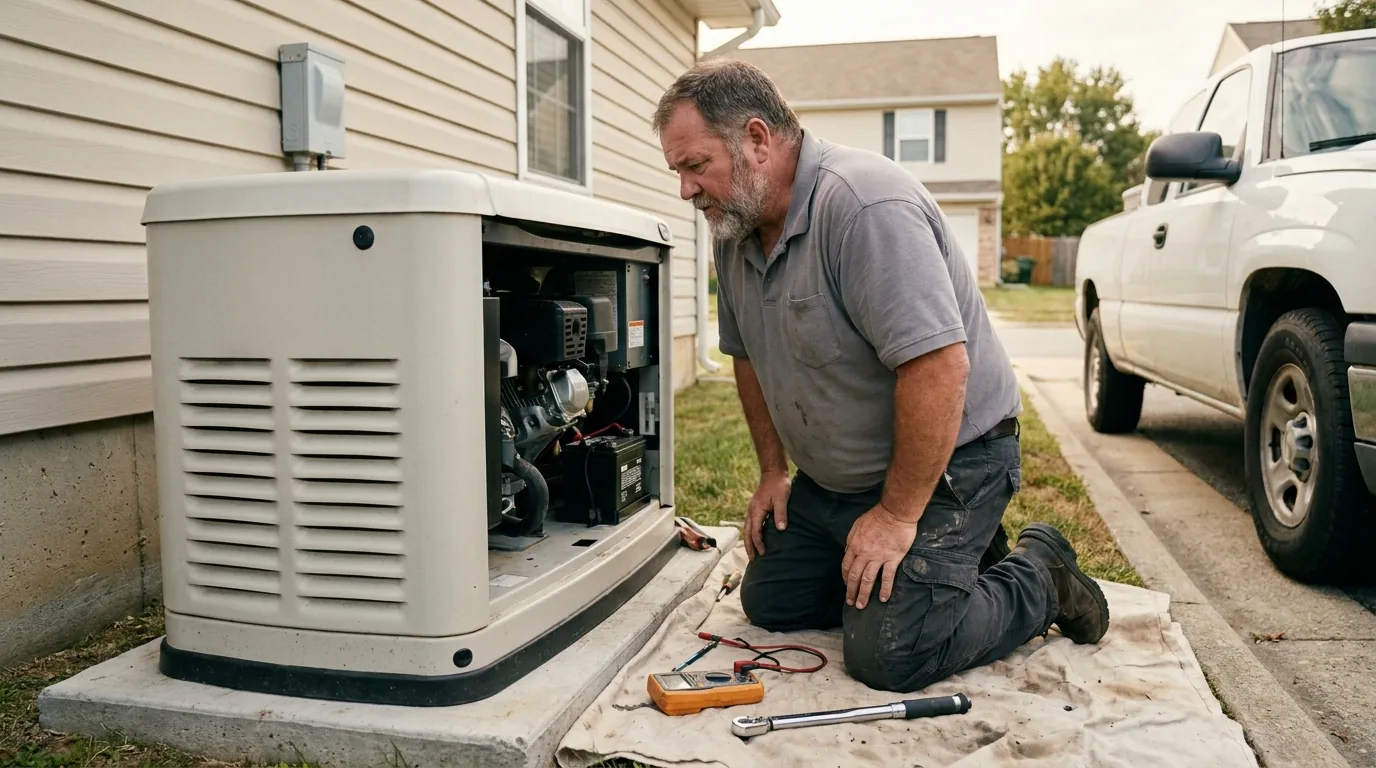
Pre-install: photograph panel, meter, gas meter, and proposed pad location with measurements. Note the NEC and manufacturer setback requirements as custom fields on the job. Day 1: pour concrete pad, set gas line, wire transfer switch, place generator on pad, and run first start. Post-install: capture a commissioning data sheet with load test results, transfer time, and exercise schedule programmed. Add a customer training photo. Hand the whole photo report to the AHJ inspector at final inspection instead of digging through your phone.
Recurring Annual Maintenance ContractStarter
Customer signs up for annual service at $385 per year. This includes oil and filter change, air filter swap, spark plug check, battery test, transfer switch test, exercise cycle verification, and full load test. Stripe pulls the card on the anniversary date. $385 times 5 years times 28 customers equals $53,900 of recurring annual maintenance revenue. This ensures 28 systems do not fail at year 4 because someone is checking them.
Google Ads and Lead Source ROIBusiness
Generator keywords cost $40 to $80 per click. Claver captures the click ID and follows it through quote to signed contract to final payment. The keyword "Generac installer Connecticut" generated 14 clicks, 9 quotes, and 3 signed jobs worth $43,500. The keyword "Standby generator near me" generated 78 clicks, 1 quote, and $4,200 in jobs.
Starter is $19/mo. Texting, AI and dispatch start on Crew at $39. The phone line and AI receptionist are on Business at $79.
Standby generator install is a high-ticket residential trade with brutal post-storm seasonality. The November storm in Connecticut takes out 250,000 customers power for 4 days. By Saturday morning every Generac dealer phone is ringing off the hook. The shops that win quote on-site with load calc, permit, and gas line all built into the price. This gets the customer to sign that Saturday. They also coordinate the gas plumber and electrician for a 1-day install.
The shops that lose still use the 2010 playbook. A sales rep visits Saturday and mails a paper proposal Monday. The customer waits 8 days for the gas plumber separate quote. They sign in 3 weeks. The install is scheduled for January because all gas plumbers and electricians are booked through the holidays.
The on-site load calc and quote is the engine. Sub-trade coordination is what delivers the install in 14 days instead of 14 weeks.
When you walk Mrs. Castillo Connecticut colonial on a Saturday morning after the November hurricane, the proposal builds itself in the app. Photograph the existing panel which is a 200A Square D QO from 2018 with room for the transfer switch tap. Photograph the gas meter which is a 1-1/2 inch service line sufficient for the 22kW Generac 350K BTUH cooling load and 200K heating load demand. Photograph the proposed generator pad location which is 12 feet from the home per NEC and Generac setback and 5 feet from the gas meter away from bedroom windows. Identify essential loads with the customer. The sump pump is essential because the basement floods within 4 hours without it. The fridge and freezer are essential. The well pump is essential because there is no water without it. The furnace blower is essential because there is no heat without it. The septic pump is essential. The security system is essential. Add two outlets per bedroom for fans and lamps. Total essential load is 18.5kW running and 22kW peak with the well pump cycling. This recommends a 22kW Generac Guardian. Build the quote at $14,500 for the 22kW Generac Guardian, 200A SER transfer switch, concrete pad, gas line stub from meter, 1-day install, commissioning, permit, and 18% margin. Set a 14-day timeline with 10-day permit and 4-day equipment lead. The customer signs digitally and pays a $4,350 deposit. Submit the permit Monday. Schedule the install for the following Tuesday.
Sub-trade coordination on install day
Sub-trade coordination turns the 1-day install into a 1-day install. Day 1 morning from 7 to 10am: the gas plumber arrives and sets the gas line from the meter to the pad location with the proper sediment trap and manual shutoff at the generator. He pressure tests the line. Day 1 mid-day from 10am to 1pm: the electrician wires the 200A SER transfer switch on the wall next to the panel. He runs the new load circuit from the panel to the transfer switch. He runs the generator output cable from the pad to the transfer switch. Day 1 afternoon from 1 to 5pm: the install crew arrives with the 22kW Generac on a delivery trailer. They set it on the concrete pad which was poured 7 days prior to allow cure. They connect the gas line and electrical. They program the controller. They run the first start and commissioning load test. They transfer the home loads to the generator while it runs at 80% capacity. They verify transfer time under 10 seconds. They verify automatic transfer back to grid when grid restores. Claver's dispatch board assigns the install crew, gas plumber sub, electrician sub, and commissioning task to the same address and day, with automated appointment reminders sent ahead of each visit. There is no wondering where the gas plumber is at 7am with the install crew waiting.
Photo and commissioning documentation
Photo and commissioning documentation gives the AHJ inspector less to send back. Claver structures every install around timestamped photos, with measurements and code setbacks logged as custom fields on the job. Pre-install photos show the panel, meter, gas meter, and proposed pad location. Photos show the concrete pad set, the gas line installed and pressure tested, the transfer switch wired, and the generator on the pad with anchor bolts torqued and vibration isolators in place. Photos show the first start and a commissioning data sheet you fill in with transfer time and load test result. Program the exercise schedule as a recurring job. The photo report exports as a PDF you attach to the AHJ permit close-out or the manufacturer's warranty registration, so you're handing over organized documentation instead of piecing it together from your phone.
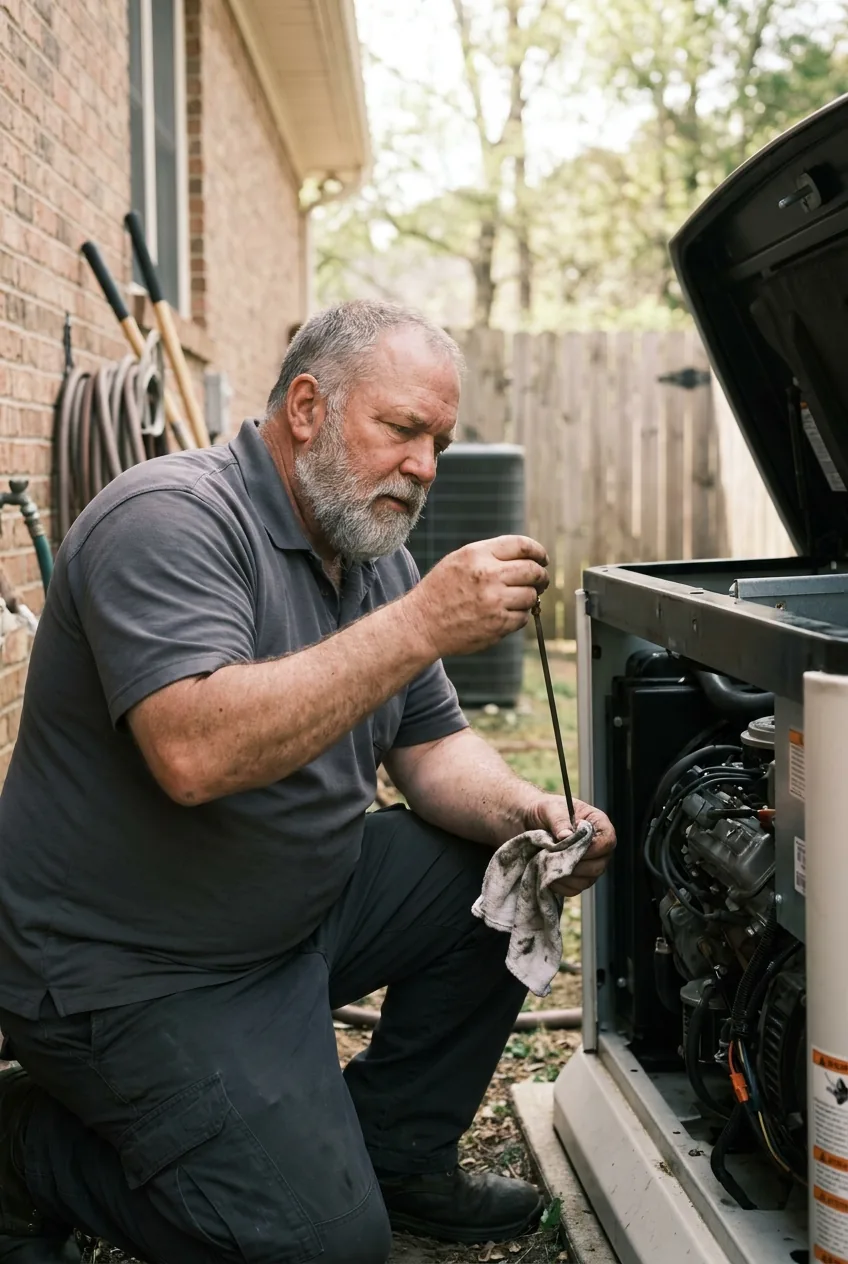
Recurring annual maintenance is the side business that holds the customer for 5 years and protects your warranty. The customer signs up for annual service at $385 per year. This includes 5W-30 oil and filter change, air filter swap, spark plug check, battery test, transfer switch test, exercise cycle verification, and full 80% load test for 30 minutes. Stripe pulls $385 on the anniversary date every year. The customer never has to remember to call. $385 times 5 years times 28 customers equals $53,900 of recurring annual maintenance revenue. This ensures 28 generators start when the next storm hits because someone is maintaining them.
Here is where most generator installers fly blind with marketing spend. You pay $40 to $80 per click on Google Ads for keywords like "Generac installer [city]" and "standby generator." Some clicks become $19K LP-fueled installs in markets without natural gas. Some become nothing. Claver captures the Google click ID when someone visits your site and tracks it through quote to signed contract to final payment. For example, the keyword "Generac installer Connecticut" might generate 14 clicks, 9 quotes, and 3 signed jobs worth $43,500, while "Standby generator near me" generates 78 clicks and $4,200 in jobs. Now you know which keyword to spend more on and which to cut.
Cancel anytime. Migrate from your current tool in 20 minutes.
Pricing
Pricing that works for generator installers
$19/mo to start. $39/mo for growing teams. $79/mo for the full toolkit with AI summaries, app phone line, on-site load calc and quoting, permit and sub-trade coordination, photo and commissioning documentation, recurring annual maintenance, and Google Ads ROI. Same plans as every Claver page with no generator upsell.
Simple pricing, users included
Every plan includes unlimited jobs, quotes, invoices, and Stripe payments. Texting, AI, dispatch and job costing start on Crew. The phone system and full back office are on Business.
Starter: $1 for 14 days, then $19/mo. · Cancel anytime · Your data exports as CSV
Common questions
Common generator installer software questions
No marketing dance. The questions generator installers ask before they sign up.
Does Claver build on-site quotes with load calc?+
Yes. Walk the home with the customer. Photograph the existing panel + meter + gas meter + proposed pad location. Identify essential loads (sump pump, fridge, well pump, furnace blower, septic pump, security, outlets per bedroom). Build the quote in 12 minutes, 22kW Generac Guardian + 200A SER transfer switch + concrete pad + gas line stub + 1-day install + commissioning + permit = $14,500 with 14-day timeline. Customer signs digitally and pays a 30% deposit through Stripe before you back out of the driveway.
Does it coordinate gas plumber + electrician + install crew for 1-day install?+
Yes. Day 1 morning (7-10am): gas plumber sets the gas line from meter to pad with sediment trap + manual shutoff. Day 1 mid-day (10am-1pm): electrician (sub) wires the 200A SER transfer switch + load center taps. Day 1 afternoon (1-5pm): install crew sets the generator on the pad, connects gas + electrical, runs first start + commissioning load test (transfer time under 10 seconds, full 22kW load test). Dispatch assigns each sub to the same address and time window, with automated appointment reminders sent ahead of the visit. No "where's the gas plumber?" at 7am with the install crew waiting.
Does it document for AHJ inspection + Generac warranty registration?+
Yes, as documentation you assemble and hand over yourself. Claver structures every install around timestamped photos: pre-install panel + meter + gas meter + pad location with measurements, concrete pad set, gas line with sediment trap + pressure test, transfer switch wired, generator on pad with anchor torques + vibration isolators, and a commissioning data sheet you build from custom fields (transfer time, load test result, exercise schedule). Export the whole set as a photo report PDF to attach to the AHJ permit close-out or the manufacturer's warranty registration. Claver doesn't file or register either one for you.
Can I import customers from ServiceTitan or Housecall Pro?+
Yes. Export your customer list as CSV from ServiceTitan, Housecall Pro or Jobber and upload it to Claver. The wizard maps the columns. Most generator installers finish the migration in 30-45 minutes. We'll personally help if anything looks off. Email [email protected].
What does Claver cost for a generator install company?+
$19/mo for Starter (2 users). $39/mo for Crew (8 users) when you want texting, AI, and the dispatch board. $79/mo for Business with the full toolkit, on-site load calc + quoting, permit + gas plumber + electrician sub coordination, photo + commissioning documentation, recurring annual maintenance, Google Ads conversion tracking. No contract. Cancel anytime.
Your current software owns your customer list. We don't want to.
Leave whenever you want. Your customers, jobs, and invoices export to CSV the day you go. Payments run through your own Stripe account, not ours.